
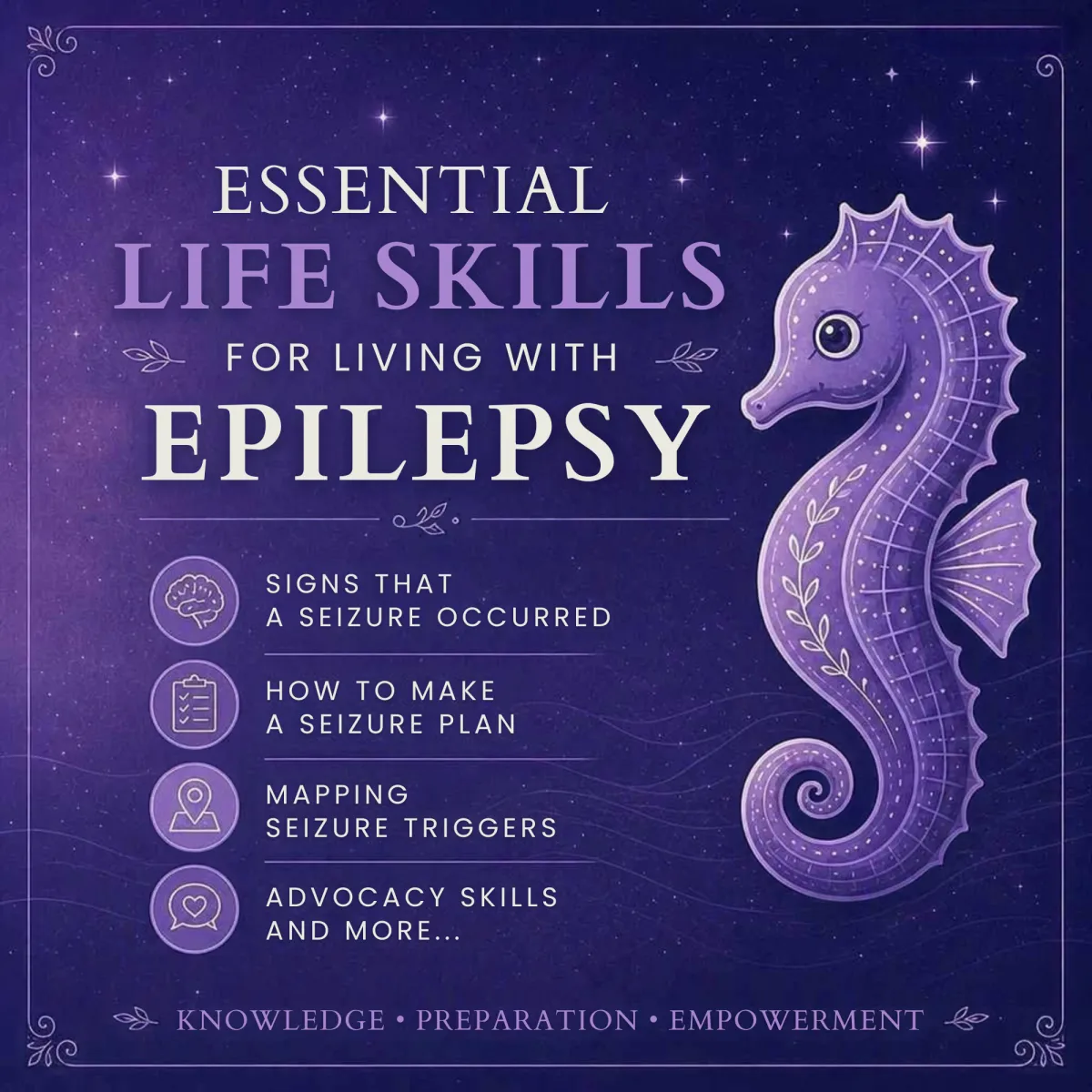
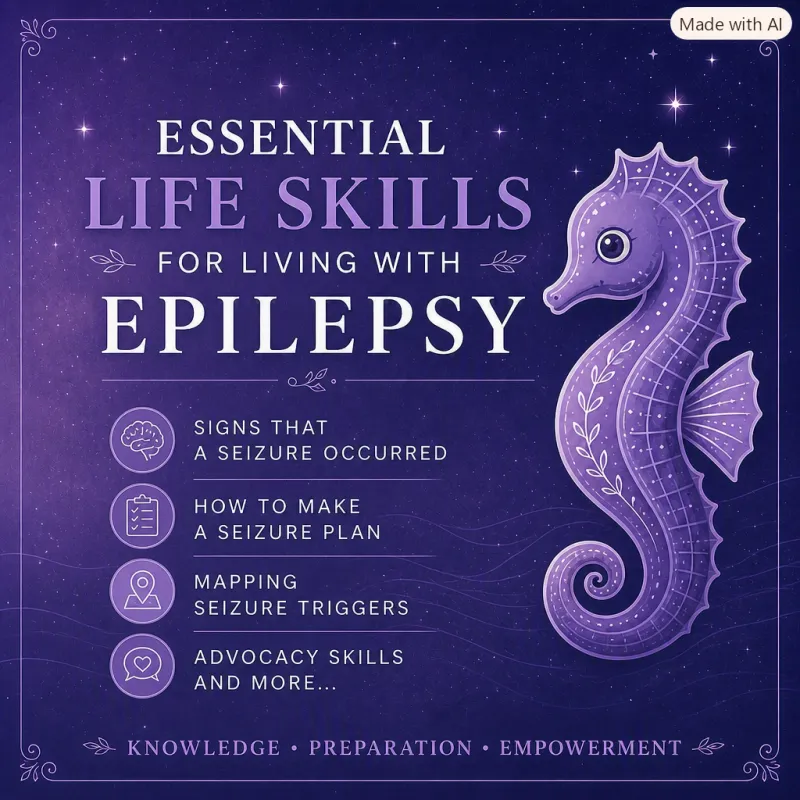
Essential Life Skills for Living With Epilepsy
A course for managing the day to day activities of living with epilepsy
Confidence • Clarity • Care
A practical, supportive course designed for individuals, families, teachers, and anyone who interacts with the epilepsy community.
A bold, compassionate course that goes far beyond seizure first aid. Learn the routines, tools, and advocacy skills that help you build a safer, calmer, more empowered daily life.
$297 • Lifetime Access • Downloads Included
💜 Why This Course?
A bold, compassionate course that goes far beyond seizure first aid. Learn the routines,
tools, and advocacy skills that help you build a safer, calmer, more empowered daily life.
$297 • Lifetime Access • Downloads Included
When Epilepsy comes knocking on your door, everyone needs to know what to do!
This course is designed for:
People living with epilepsy
Parents, partners, and caregivers
Teachers, community professionals, and friends
Neurologists who want to understand what their patients are really living through
Anyone who wants to understand epilepsy beyond the basics
💜 Why This Course?
Many seizure-awareness courses are free, and most of them stop at basic first aid and crisis response. They teach you what to do in the moment, but they don’t teach you how to actually live with epilepsy, support someone you love, or understand the hidden realities that shape everyday life.
This is not just another seizure-management course. This is the course that finally gives you everything you wish you had known from day one — the practical skills, the emotional clarity, the legal knowledge, and the real-world guidance that no one ever explains. It’s the education people with epilepsy and their families deserve, but rarely receive.
🌸 What You'll Learn:
Learning the language of epilepsy might take a lifetime,
but you have to act fast.
When seizures land you in the ER,
you want to minimize the bad days, but also know how to communicate your needs to the professionals around you.
This includes teachers, employers, police and EMT.
You depend on their help. Make sure they know what you need from them.
Seizure Action Plans
Create a clear, personalized plan that helps you respond calmly and effectively.
Medical Alert Education
Understand how to communicate your needs quickly and confidently.
Catamenial Epilepsy
Learn how hormonal cycles influence seizure patterns — and how to track them.
Epilepsy Awareness & Advocacy
Build the skills to speak up, request accommodations, and use the ADA to protect yourself.
Quality of Life Strategies
Plan your Daily routines
Pay attention to seizure triggers
Basic information about supplements
Lifestyle adjustments that make a real difference.
EMS Expectations
Know what to expect — and what not to expect — when emergency responders arrive.
Medication & Supplement Tracking Tools
Downloadable sheets to help you stay organized and consistent.
Medical & Legal Proxies
An opening conversation into the legal protections you should explore to protect your health and your wealth.
Why you need them, how they migh protect you.
Creative Learning Tools
We’ve included a little fun in here. Our coloring pages featuring seahorses, octopuses, and the human brain — perfect for teaching kids, reducing fear, and building understanding.
💗 Why Buy Essential Life Skills?
Your neurologist gives you 15 minutes, and hopefully a prescription that works. This course gives you real world knowledge that empowers you to build your life.
Epilepsy is lifelong (with rare exceptions)
You should carry a wallet card; and have a seizure action plan
Medications can affect mood and personality
Certain vitamins may support neurological health
Some foods are known seizure triggers
You can advocate for yourself using the ADA
SUDEP is real, and understanding risk empowers safety
What you may not realize:
This course teaches the practical, daily skills that make epilepsy manageable — not mysterious.
The goal of this course is to help you create the life you want to lead, despite having a disability.
Police are required to be dispatched with most EMS calls.
Many people Struggle to maintain employment
There is a higher rate of divorce and overall loneliness
There is a higher rates of sexual dysfunction
Increased risk of suicide (2x–5x higher than the general population)
Other Issues People with Epilepsy Have Encountered:
Emergency-room discrimination — seizures are often mistaken for intoxication, psychiatric behavior, or “noncompliance,” leading to dangerous misunderstandings and delayed care.
Fear of SUDEP (Sudden Unexpected Death in Epilepsy) — a rare but real risk that many families are never told about.
Memory loss and cognitive fog — difficulty recalling conversations, names, tasks, or recent events, often worsened by medications or sleep disruption.
Extreme fatigue and hypersomnia — overwhelming sleepiness that is frequently dismissed as laziness.
Personality and mood changes — shifts in irritability, emotional expression, or social behavior caused by seizures, medications, or repeated neurological stress.
Loss of independence — driving restrictions, employment barriers, and reliance on others for transportation or safety.
These experiences are not universal — but they are reported often enough to matter. Understanding these risks helps you prepare, protect yourself, and advocate effectively.
Knowledge is the first step toward protection, stability, and empowerment.
🌸 Arm Yourself with Knowledge
When you understand the “little things,” you change the big things.
If you consider these “little things”…
Taking meds on time
Identifying and avoiding seizure triggers
Knowing how your period provokes seizures
Having a seizure action plan that prevents trauma
💜 Course Investment
$297
Information that can save a life


Medical Disclaimer: The information provided in Essential Life Skills is for educational purposes only and is not intended as a substitute for professional medical advice, diagnosis, or treatment. Always seek the advice of your physician or other qualified health provider with any questions you may have regarding a medical condition.
© 2026 Epilepsy Unmasked. All rights reserved.